
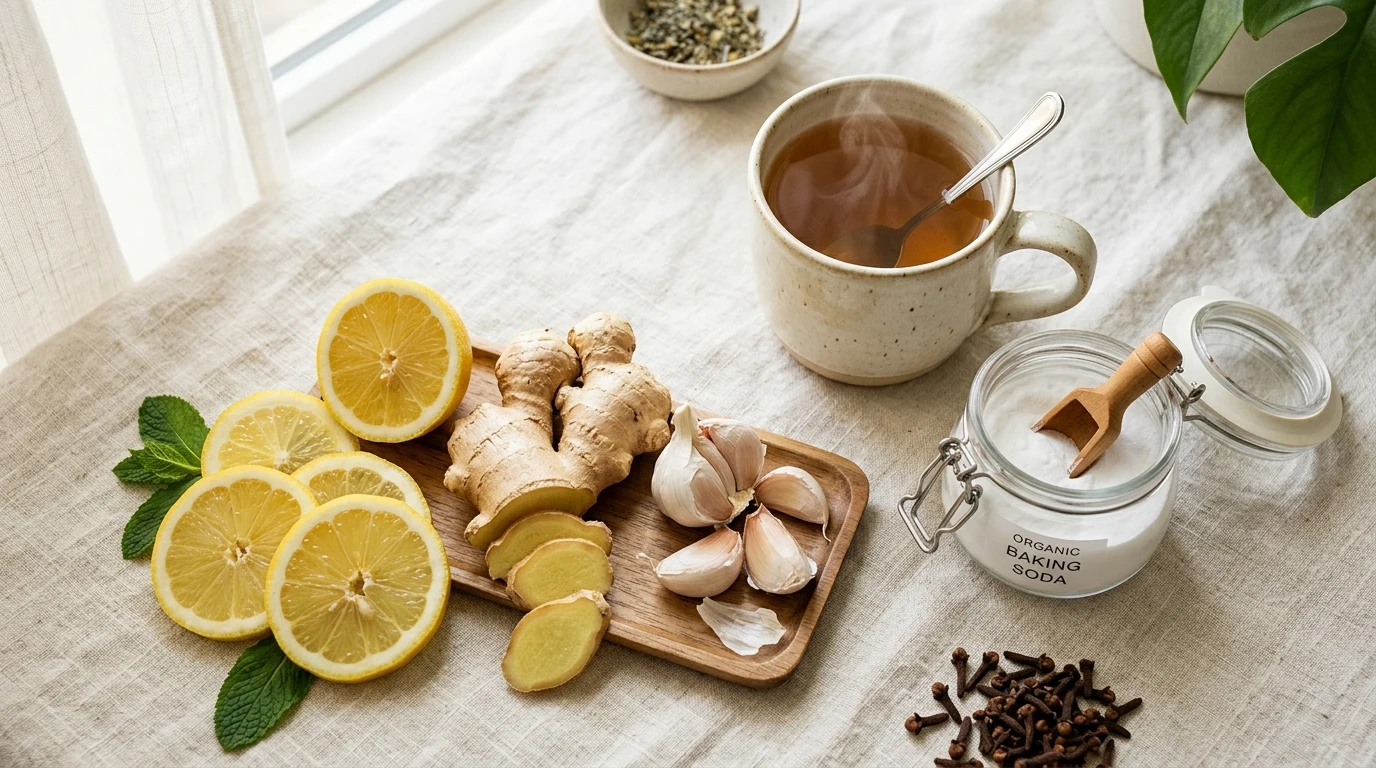
Baking Soda, Lemon, Ginger & Garlic While Nursing
✨ This article was AI edited. Editorial responsibility: BlossomingMotherhood.Com.
Culinary remedies combining bicarbonate of soda, lemon, ginger, garlic, and cloves are safe for breastfed babies when consumed in dietary amounts by nursing mothers. None of these ingredients transfer harmful chemical toxins into breast milk; however, excessive sodium bicarbonate can alter electrolyte balance, while concentrated garlic and cloves may transiently alter milk flavor or cause minor infant gastrointestinal fussiness.
Home remedies featuring kitchen staples—such as warm lemon-ginger tea with honey, garlic elixirs for immune support, or diluted baking soda for heartburn—have been used across generations to alleviate common ailments. For lactating mothers, navigating the safety of natural concoctions requires understanding how active botanical compounds and alkaline salts metabolize in maternal blood and transfer into human breast milk. Understanding the pharmacology of these individual ingredients empowers nursing mothers to care for their health safely without disrupting infant digestion.
Contents
Pharmacokinetics and Milk Transfer of the 5 Key Ingredients
Each of these five traditional ingredients possesses distinct biochemical properties, metabolic pathways, and rates of maternal-to-infant transfer:
- Bicarbonate of Soda (Sodium Bicarbonate): A systemic alkalizing agent that neutralizes gastric acid into sodium chloride, water, and carbon dioxide. Because bicarbonate ions are tightly regulated by maternal renal and respiratory homeostasis, dietary amounts (such as in baked goods or occasional antacid use) do not significantly alter breast milk pH or sodium concentration. However, chronic excessive intake should be avoided to prevent maternal metabolic alkalosis.
- Fresh Lemon Juice & Peel (Citrus Limon): Rich in ascorbic acid (vitamin C), citric acid, and bioflavonoids. Citric acid is metabolized into carbon dioxide and water via the citric acid cycle. It does not acidify breast milk, making it completely harmless to the nursing infant’s stomach lining.
- Ginger Root (Zingiber Officinale): Contains bioactive gingerols and shogaols. Rated Category L1 (Safest) and recognized as Generally Recognized as Safe (GRAS) by the FDA. Ginger is a traditional galactagogue that supports maternal digestive motility and has zero documented adverse effects on infant wellness.
- Garlic Cloves (Allium Sativum): Contains sulfur compounds including allicin and diallyl disulfide. While odorless in blood, lipid-soluble sulfur metabolites rapidly cross into breast milk, temporarily altering its aroma and flavor. Interestingly, landmark pediatric studies by Mennella and Beauchamp demonstrated that infants actually nursed longer and consumed more milk when breast milk was naturally flavored with garlic.
- Whole Cloves (Syzygium Aromaticum): Packed with eugenol, a potent aromatic phenol with antimicrobial and analgesic properties. In culinary spice quantities, eugenol is metabolized by maternal glucuronidation and poses no infant risk. Concentrated medicinal clove essential oils, however, should never be ingested orally or applied to nipples.
Safety and Compatibility Matrix for Breastfeeding Mothers
The table below summarizes clinical safety ratings, infant tolerance indicators, and dosage thresholds for each component:
| Ingredient | Lactation Safety Rating | Primary Maternal Benefit | Infant Transfer Risk | Clinical Usage Guidance |
|---|---|---|---|---|
| Bicarbonate of Soda | Safe in dietary moderation | Gastric acid neutralization, baking | Negligible electrolyte transfer at standard doses | Limit to 1/2 tsp diluted in water; avoid daily chronic use |
| Lemon Juice / Zest | Safest (Category L1) | Antioxidant support, vitamin C replenishment | Zero risk; citric acid is metabolized before milk synthesis | Enjoy freely in teas, dressings, and hydration tonics |
| Fresh Ginger | Safest (Category L1) | Anti-nausea, digestive stimulation, galactagogue | Trace gingerols; well-tolerated by infant gastrointestinal tract | Culinary use and up to 1000 mg dried root daily |
| Garlic Cloves | Safe (Category L2) | Immune modulation, antimicrobial defense | Aromatic sulfur volatiles alter milk scent transiently | Culinary use safe; monitor sensitive infants for slight gas |
| Cloves (Spice) | Safe in culinary amounts | Anti-inflammatory, oral soothing, warming spice | Trace phenolic compounds; safe in tea and cooking | Use 1–3 whole cloves in teas; avoid pure essential oil ingestion |
Potential Infant Reactions: What to Watch For
While this combination will not poison or cause toxic harm to a breastfed infant, individual infant sensitivities to dietary flavorings can occasionally occur:
1. Temporary Milk Flavor Sensitivity
Maternal consumption of a pungent garlic, ginger, and clove tonic will impart a distinct savory and spiced note to breast milk within 1 to 3 hours after ingestion. The vast majority of babies enjoy or tolerate this variation, which helps develop early palate diversity. However, rare infants may show brief hesitation at the breast if the flavor change is abrupt.
2. Mild Gassy Fussiness
If a mother consumes massive amounts of raw garlic or highly concentrated ginger tonics on an empty stomach, maternal gut motility increases. In sensitive or colicky newborns under 8 weeks of age, trace aromatic volatile oils can occasionally correlate with mild gassiness or more frequent bowel movements.
3. Skin Contact Precautions
Never apply raw garlic paste, clove essential oil, or undiluted lemon juice directly onto the areola or nipples to treat thrush or soreness. These compounds cause severe contact dermatitis, chemical burns, and mucosal blistering in a newborn’s mouth. All intake must be consumed orally by the mother.
Safe Preparation Protocols for Immune Tonics
If you wish to prepare a restorative postpartum wellness tonic combining these ingredients, follow these clinical safety recommendations:
- Use Gentle Brewing Methods: Simmer 1 inch of sliced fresh ginger and 2 whole cloves in 16 ounces of filtered water for 10 minutes. Remove from heat, stir in the juice of half a fresh lemon and a teaspoon of raw honey (safe for mothers to consume). Drink warm.
- Cook Garlic Lightly: Incorporate garlic into warm soups, stews, and roasted dishes rather than eating large quantities of raw cloves on an empty stomach to minimize maternal reflux.
- Separate Baking Soda Ingestion: Take sodium bicarbonate only when necessary for acute heartburn, dissolved in a full glass of water, separated by at least two hours from iron and prenatal vitamin supplements.
Frequently Asked Questions
Can drinking baking soda and lemon water harm my breastfed baby?
No. In reasonable amounts (such as 1/2 teaspoon of baking soda in water with lemon juice for occasional indigestion), it will not harm your nursing baby. The solution is rapidly neutralized in your stomach and does not enter breast milk as pure baking soda.
Can raw garlic cause colic in breastfed infants?
Garlic does not cause true colic, which is a developmental condition. While garlic flavors breast milk for several hours, most infants actually nurse more vigorously. If you notice your baby is unusually gassy after you eat heavy garlic meals, simply reduce raw consumption.
Is clove tea safe to drink while breastfeeding?
Yes. Mild herbal teas containing whole cloves, cinnamon, or ginger are completely safe for breastfeeding mothers. They support digestion and provide soothing warmth without adverse effects on infant health.
Get our latest guides, news, and insights highlighted in your Google Search & AI Overviews.


 STRUGGLING READER TRANSFORMED